
After a long Chicago winter, homeowners start thinking about how to get more from their backyard. In 2026, the biggest shift is not a new board color or railing style alone—it is the way decks are planned from the start. Instead of a flat platform with a grill on it, more Chicagoland homeowners are designing true outdoor rooms that feel like an extension of the home.
That is why 2026 deck design trends for Chicago homes focus on function first: zoned layouts, low-maintenance materials, clean sightlines, and lighting you can actually use after sunset. The best designs also account for freeze-thaw cycles, lake-effect moisture, and the short but intense patio season we get every year.
Whether you are planning a full rebuild or refreshing what you already have, these trends can help you choose a layout and finish that looks current now and still makes sense five years from now. Below, the Chicago deck experts at Chicago Deck Expert break down what is driving deck design in the Chicago area this year—and how to apply each trend to your own project.
Decks Become Full Outdoor Rooms
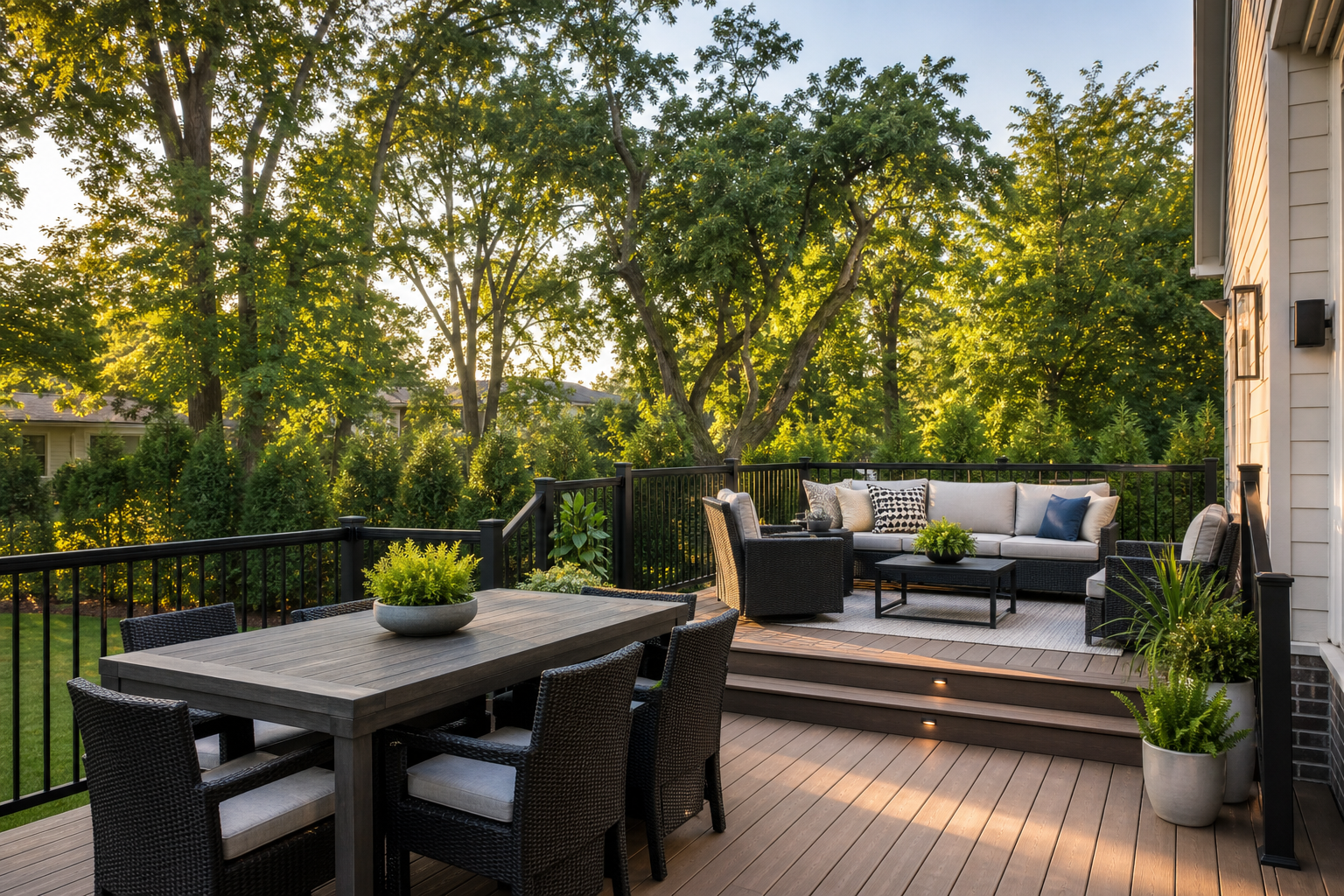
The flat, one-size-fits-all deck is fading. In its place, homeowners are creating zoned outdoor spaces with distinct areas for dining, lounging, grilling, and even morning coffee. A subtle level change, a built-in bench, or a shift in board direction is often enough to define each zone without making the deck feel crowded.
Multi-level layouts are especially popular on North Shore lots where elevation changes naturally separate spaces. Even on a single plane, thoughtful furniture placement and integrated planters help a deck feel intentional rather than like leftover square footage behind the house.
If you are starting from scratch, this is the right moment to build a new deck around how you actually live outside—not just how the space photographs. Think about traffic flow from the back door, where guests naturally gather, and whether you need a dedicated cooking zone away from seating. A well-zoned deck gets used more often and holds up better to daily wear because each area has a clear purpose.
Low-Maintenance Composite & Warm Earth Tones
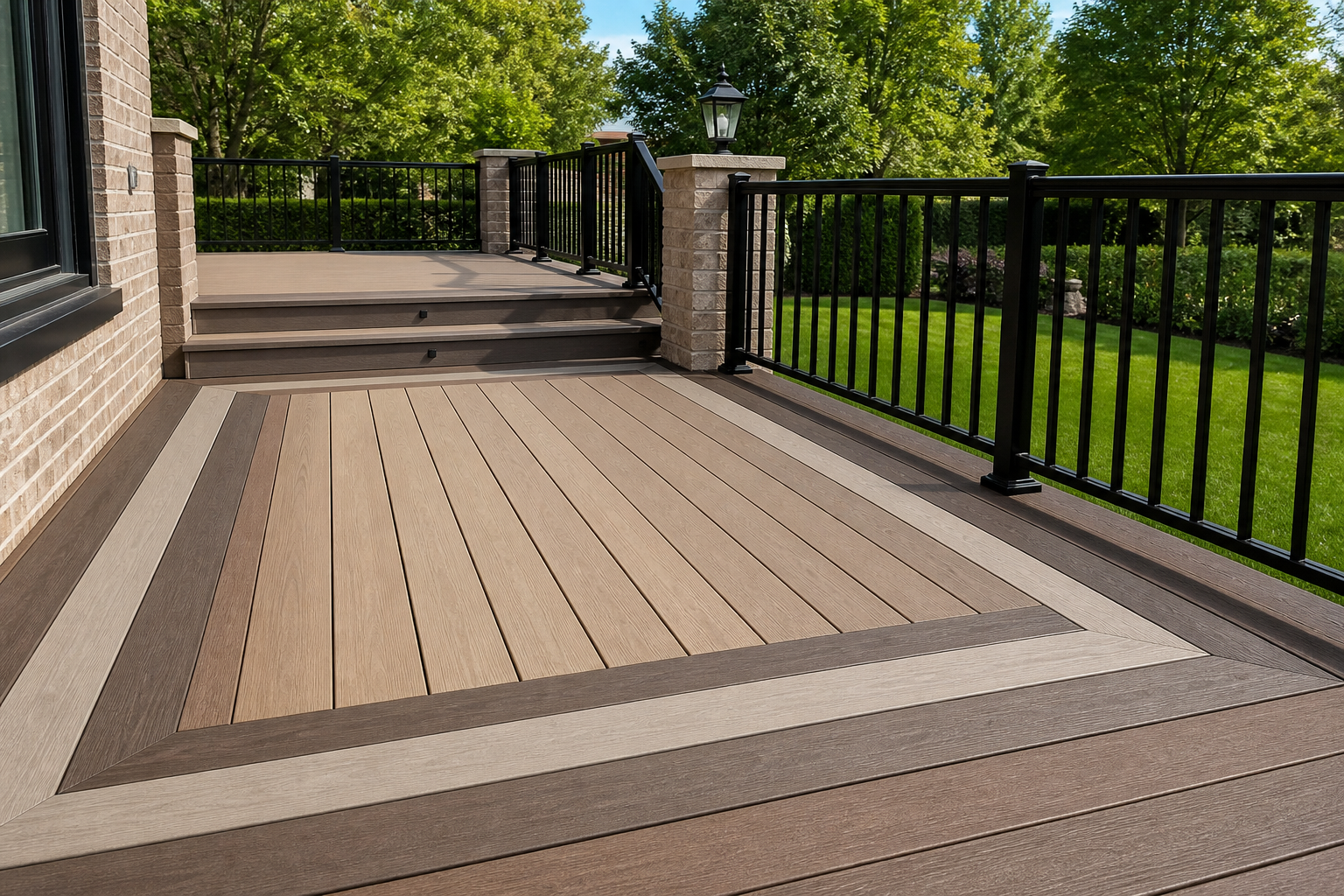
Cool grays dominated deck palettes for years. In 2026, Chicago homeowners are leaning toward warmer neutrals—driftwood browns, soft greiges, and multi-tonal boards that mimic natural hardwood without the annual staining schedule. The look pairs beautifully with brick bungalows, painted siding, and the stone accents common across Cook and Lake County suburbs.
Composite decking continues to lead this trend because it handles Chicago's moisture swings without warping, splintering, or fading as quickly as untreated wood. Hidden fastener systems and picture-frame borders add a refined, built-in look that reads as custom design rather than a basic platform.
That does not mean wood is out—but the homeowners choosing it in 2026 are doing so deliberately, often on covered sections or accent details where the grain can shine without taking the full brunt of sun, snow, and salt exposure.
Architectural Railings That Open Up the View
Railings are no longer an afterthought. Horizontal cable systems, slim black aluminum, and glass panel options are replacing bulky wood pickets across the Chicago suburbs. The goal is simple: keep the deck safe while preserving sightlines into the yard, tree canopy, or skyline beyond.
Clean-line railings also pair well with the warmer decking tones trending this year. Black metal in particular creates a crisp contrast that makes earth-tone boards feel more polished. For homes with lake or park views in places like Evanston and Highland Park, minimizing visual clutter at the railing line can be as important as the decking itself.
Hidden hardware, flush stair treads, and consistent fascia detailing complete the architectural look. These are small choices that signal quality—and they matter when you want a deck that feels designed, not assembled.
Layered Lighting & Smart Tech
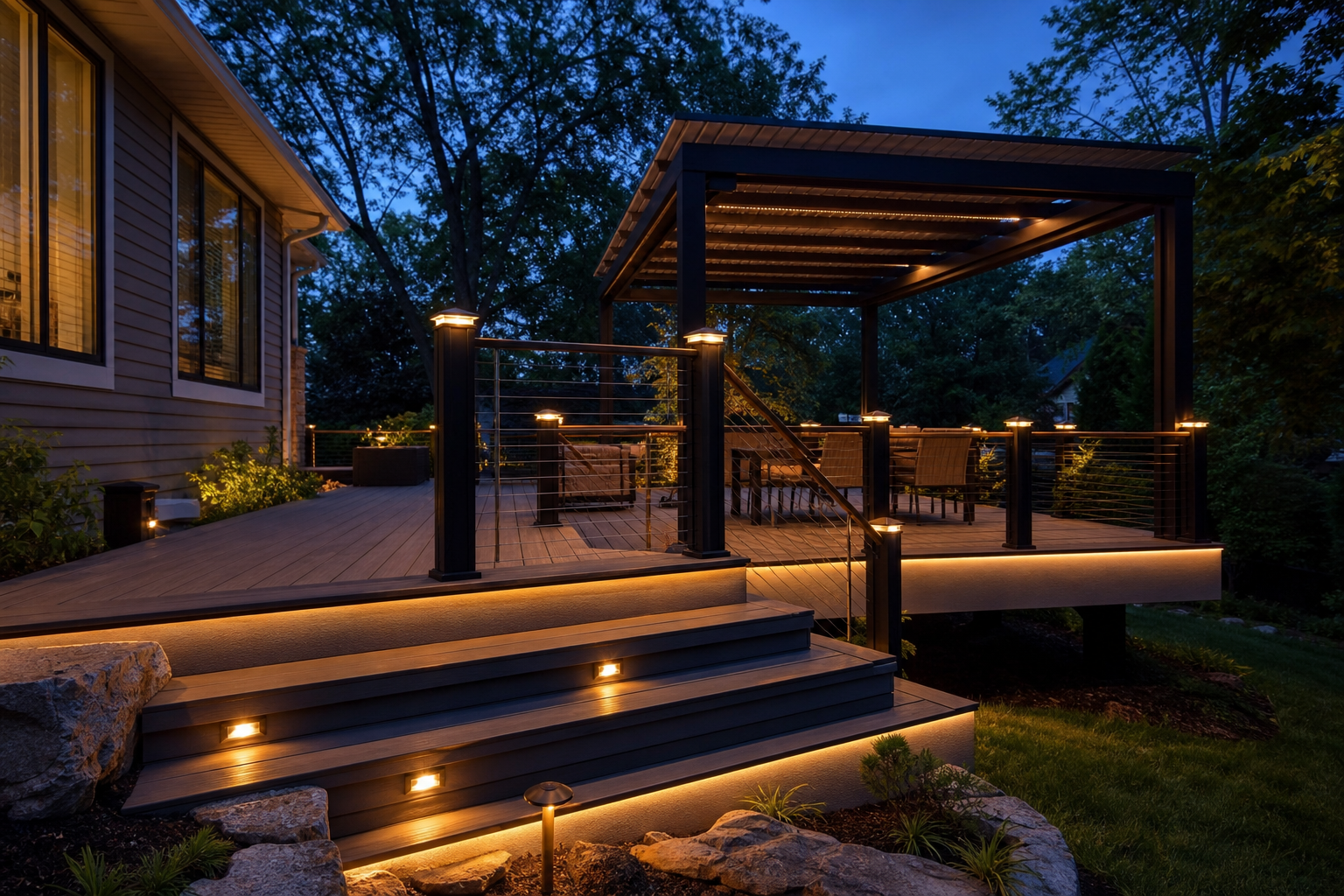
String lights still have their place, but the bigger 2026 move is integrated lighting planned during the build—not added as an afterthought. Recessed stair lights improve safety and meet visibility expectations in many municipalities. Under-rail LEDs and post-cap fixtures create a soft glow that makes the deck usable well past sunset without harsh floodlight glare.
App-controlled dimming and timer schedules are showing up on more projects, especially for homeowners who entertain regularly. The best lighting plans layer these elements so each zone has enough illumination for its purpose—bright near steps, softer near lounge seating.
According to industry data from deck design trends tracked by NADRA, demand for multi-functional outdoor spaces with built-in lighting continues to climb nationwide. In Chicago, where usable evenings can be brief in spring and fall, lighting dramatically extends the season you actually enjoy outside.
Pergolas & Shade Structures
Shade is a priority when summer sun hits a south- or west-facing deck. Pergolas with retractable canopies, motorized louvers, and integrated downlighting are among the most requested add-ons in 2026. They define an outdoor room overhead, add architectural interest, and make the space comfortable during midday heat.
One detail worth planning early: pergola posts should anchor to the deck's structural framing or independent footings—not just surface boards. Wind loads and seasonal movement make proper attachment essential, especially in open suburban lots across DuPage and Lake County.
Whether you want partial shade for dining or a full covered section for rainy spring days, integrating the structure into the original design keeps proportions balanced and costs predictable.
Designing for Chicago Weather
The prettiest trend on Pinterest still fails if it cannot survive a Midwest winter. Chicago decks need proper drainage, durable fasteners, and materials chosen for freeze-thaw performance—not just curb appeal. Sloped surfaces, adequate gaps between boards, and sealed ledger connections are not glamorous, but they are what separate a deck that lasts from one that needs major deck restoration within a few seasons.
Local permitting rules vary by village, so confirm requirements before you finalize plans—especially for structural changes, raised platforms, or new stair runs. Homeowners in Glenview, Evanston, and surrounding suburbs should also factor in setback rules, railing height minimums, and inspection schedules that can affect project timing.
Working with a local crew who knows Chicagoland codes saves headaches at inspection and at resale. You can visit our Glenview location or request an on-site walkthrough to talk through layout, materials, and what makes sense for your home before construction season peaks.
Bring 2026 Deck Trends to Your Backyard
The through-line across every 2026 deck design trend is intentionality: zones that match how you live, materials that reduce upkeep, railings and lighting that elevate the everyday experience, and structural details that respect Chicago weather. You do not need every feature on this list—a focused plan with two or three priorities often delivers the best result.
If you are ready to explore layouts, board samples, or a refresh of an existing structure, start with a conversation. Request a free estimate from Chicago Deck Expert and we will help you translate these trends into a deck that looks great this summer and performs for years of Midwest seasons ahead.