
Fence Restoration in Chicago
Leaning, Gray & Rotting at the Base? We Straighten and Refinish It
Your fence is the one thing the whole street sees — and the first thing Chicago's freeze-thaw winters push out of line. We re-set leaning posts, cut out the rot, replace warped boards, and refinish both sides so your fence stands straight and looks new again, for a fraction of replacement.


Get a free fence restoration quote
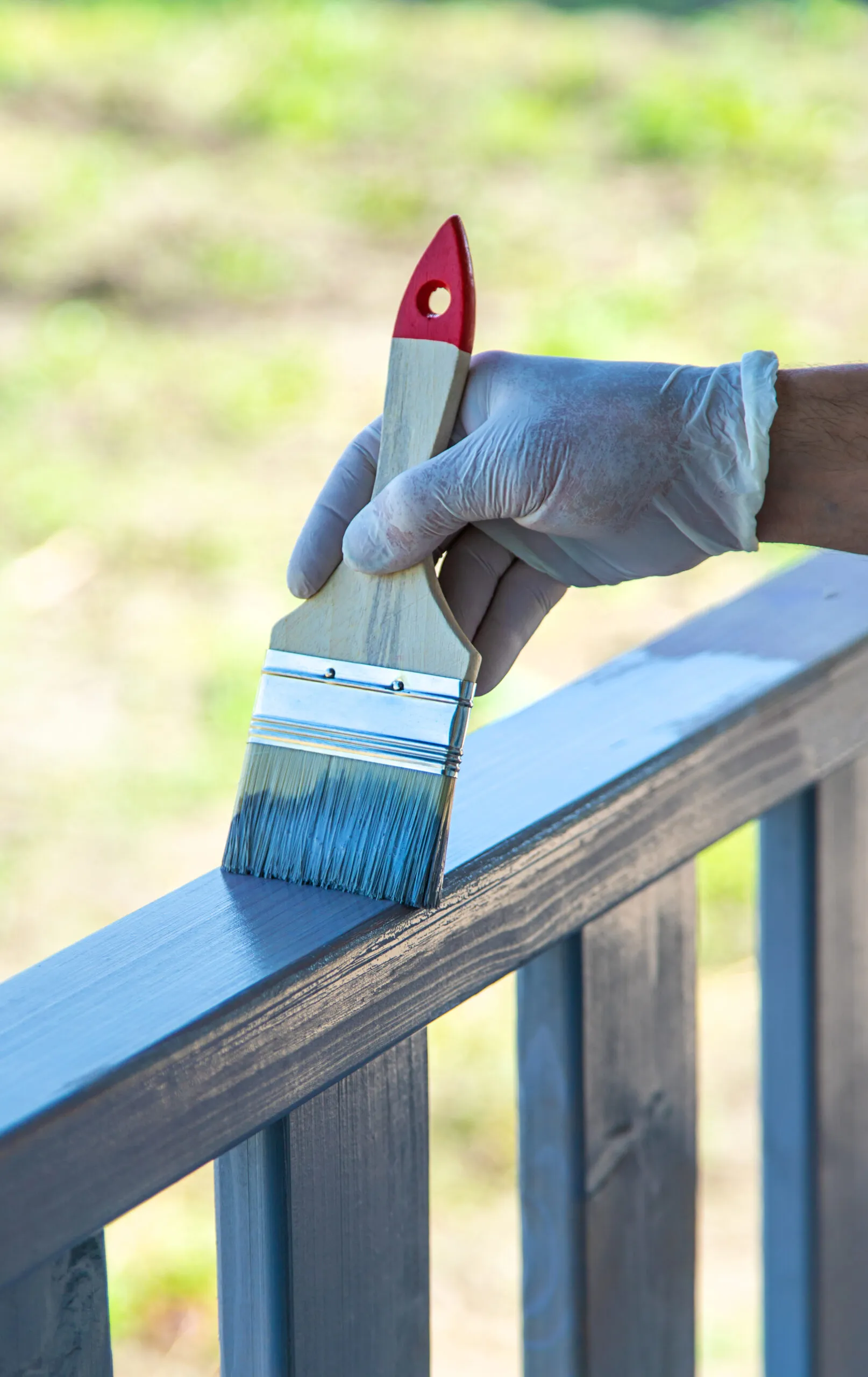
What Fence Restoration Involves — and Why It Beats Replacement
Fence restoration brings a tired, weathered fence back to straight, solid, and good-looking condition — without the cost and disruption of tearing out a whole line and starting over. It shares the same core craft as our deck restoration service, but a fence has its own problems: it stands in the open with no roof, both faces take full sun and rain, and the posts live in the ground where Chicago's frost heave and moisture do their worst.
Because a fence is a long, load-free run anchored by a few posts, most "failing" fences aren't failing at all — a handful of shifted or rotted posts throw the whole line out of plumb while the pickets are still sound. That's why we always start at the posts and footings, below the surface, before we touch the finish.
Here's what a full fence restoration typically includes:
- Straightening and re-setting leaning or frost-heaved posts
- Ground-line rot repair and new or re-poured footings
- Replacement of warped, split, or missing pickets and rails
- Gate re-squaring, re-hanging, and latch alignment
- Sanding, then a fresh stain and protective sealer on both sides, matched to your home
Call us at (630) 984-6116 or request your free estimate online.
Get FREE QuoteCommon Fence Problems We Repair
Chicago's freeze-thaw winters, humid summers, and full-sun exposure are hard on an outdoor fence. These are the issues we see most — and each one is fixable when it's caught before the posts give out.
Fence Styles We Restore
Every fence is built and boarded a little differently. Whatever style runs along your yard, we've restored one like it across Chicago and the surrounding suburbs.
Privacy Fences
Tall, solid runs with no gaps. The full board face grays fast in the sun, so an even two-sided refinish is what brings the whole wall back.
Picket Fences
The classic curb-appeal fence. Individual pickets crack and pop loose, and the low profile puts every flaw at street level.
Shadowbox & Board-on-Board
Alternating boards look good from both yards but hide rot in the overlap. We open, inspect, and refinish so both faces stay sound.
Split-Rail & Ranch
Fewer parts, but each post and rail carries real exposure. We replace cracked rails and re-set posts while keeping the open, rustic look.
Cedar & Pressure-Treated
Species matters. Cedar weathers gray gracefully; pine and PT lumber move more. We match products and prep to the wood you actually have.
Restore or Replace? An Honest Call
The most common question we get about fences — and the one plenty of contractors answer with "replace it" because a new fence is the bigger sale. Here's how we actually decide, so you can see roughly where your fence lands before we ever show up.
Restore it when…
- Most posts are still solid — only a few lean or have surface rot
- The fence is mainly gray, faded, or green from missed maintenance
- A handful of boards are warped or split, but the rails are sound
- The gate sags or drags but the panels are in good shape
- You want to keep a fence that already matches the yard and neighbors
Replace it when…
- More than about a third of the posts have rotted through at the base
- The whole line is racking or falling over, not just tilting
- Most boards are cracked, missing, or crumbling, not just a few
- The fence was undersized or wrongly built for the load from the start
- You're changing height, style, or layout, not just refreshing it
Not sure which side you're on? That's exactly what the free on-site inspection is for. We'll walk the line with you, sound out the posts, and give you a straight answer — even when that answer is "this one's worth restoring." When a fence really is past saving, our building team can quote a rebuild instead.
Our Fence Restoration Process: Four Careful Steps
A fence lives entirely outdoors and gets judged from the street, so we don't cut corners. Here's exactly how we bring yours back.
Fence Restoration Cost in Chicago
Fences are priced by the linear foot, not by area — then any post, gate, or board work is added on top. These ranges give you a realistic starting point before your free on-site quote.
Typical Price Ranges
| Service | Typical Cost |
|---|---|
| Clean, sand & refinish, both sides (per linear ft) | $3 – $8 |
| Re-set / re-plumb a leaning post (each) | $75 – $250 |
| New post with footing (each) | $150 – $400 |
| Warped / split picket replacement (each) | $6 – $18 |
| Rail replacement (per rail) | $25 – $75 |
| Gate repair & re-hang (each) | $120 – $450 |
Refinishing scales by the length of the run, while structural fixes are priced per post, board, or gate — which is why a mixed-scope fence quote combines both. Prices reflect Chicago-area labor and materials and are confirmed after inspection. For a deeper look at what drives wood-refinishing costs, see our restoration cost & DIY guide.
Example Estimate
A light refresh can start near $500, while a long run needing several posts re-set and a full two-sided refinish may run $2,000–$3,000+. No hidden fees — ever. Want to see the numbers on a real job? Here is our fence washing and sealing cost breakdown from a recent cedar fence on Chicago’s Northwest Side.
Get Your Exact PriceWhat Our Restoration Clients Are Saying
"Half our backyard fence was leaning after last winter and we assumed it was a full replacement. They re-set the posts, swapped a few bad boards, and restained the whole thing — straight as new for way less than a new fence would've cost."
"Professional and honest. They actually talked us out of replacing and showed us the posts were still solid. Refinished both sides so the neighbors' view looks as good as ours, and fixed the gate that never latched right."
"Our cedar privacy fence had gone completely gray. They brought back the color on both faces and sealed it, and it matches the deck they did for us last year. Tidy, on time, and highly recommend."
Fence Restoration FAQs: Straight Answers from Our Team
Can you fix a leaning fence without replacing the whole thing?
Usually, yes. Most leaning fences come down to a handful of posts that have shifted from frost heave or rotted at the concrete line — not the whole run failing. We dig out and re-set individual posts, add or repour footings, and re-plumb the panels so the line is straight again, all while keeping your existing pickets and rails. A full replacement is only warranted when the majority of posts and boards are gone — a call we confirm during the free on-site inspection before any work begins.
Do you stain and seal both sides of the fence?
Yes — and it matters more on a fence than almost anything else we finish. A fence has no roof and both faces are fully exposed to sun and rain, so coating only the street side leaves the back to gray, crack, and rot at a different rate. We wash, prep, and finish both sides with a quality stain and sealer so the whole fence ages evenly and the protection actually lasts. Where a fence sits right on a shared property line, we coordinate access with you in advance.
Should I restore my fence or replace it?
It comes down to how much of the structure is still sound. If the posts are mostly solid and the graying, a few rotted boards, or a sagging gate are the real problems, restoration costs a fraction of replacement and keeps a fence that's already weathered into your yard. If more than roughly a third of the posts have rotted through at the base or the whole line is racking over, replacement is the smarter spend. We give you an honest call either way during the free inspection — see the pricing section above for where restoration typically lands.
How much does fence restoration cost in Chicago?
Fences are priced by the linear foot rather than by area. A straightforward clean-and-refinish typically runs $3 to $8 per linear foot, while re-setting leaning posts, replacing pickets, or rebuilding a gate is priced per item on top of that. Most homeowner fence projects land between $500 for a light refresh and $3,000+ for a long run that needs several posts re-set and a full two-sided refinish. You can see itemized ranges in the pricing section above. Every quote is free and confirmed on-site — no obligation.
Should my fence be stained or painted?
For most Chicago wood fences we recommend a penetrating stain over paint. Stain soaks in, shows off the cedar or pine grain, and when it wears it fades gracefully instead of peeling — so the next refresh is a clean recoat, not a strip-and-scrape. Paint gives a solid, uniform color but tends to blister and flake on a fence's exposed, moving boards. Whichever you choose, we pair it with a sealer rated for freeze-thaw. If your fence predates 1978 and was painted, its old coating may contain lead, so we follow EPA Lead-Safe (RRP) practices during prep.
When is the best time of year to restore a fence in Chicago?
Late spring through early fall is ideal, because stains and sealers need dry, mild days above about 50°F to cure properly. We schedule fence work year-round and plan around the forecast — our Chicago winter-prep guide explains why sealing before the freeze-thaw season keeps water out of the end grain. If your fence is already graying, leaning, or showing soft boards at the base, it's best not to wait a full season. Contact us and we'll schedule around your timeline.
Do you repair sagging gates and latches too?
Yes. Gates take the most abuse on any fence — they swing, slam, and carry their own weight on a few hinges — so they sag, drag, and stop latching first. We re-square the gate frame, add anti-sag bracing or a tension cable, re-hang it on solid hardware, and re-align the latch so it closes clean. A gate that works is often the single thing that makes a whole restored fence feel new again.
Restoring the Deck & Yard Too?
A fence is often just the boundary of a larger outdoor space. If your deck, porch, or railings need the same attention, our full Chicago deck restoration service covers cleaning, repairs, sanding, staining, and sealing — done in the same visit so every wood surface matches.