
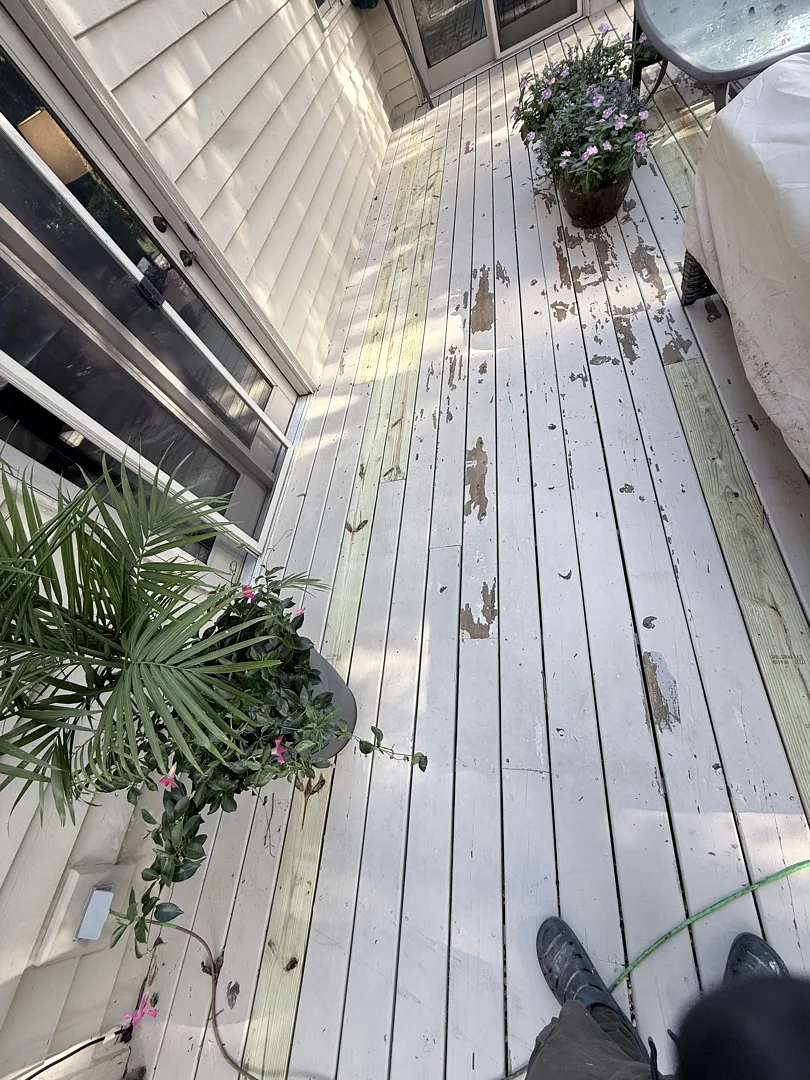
The finish on this Willowbrook deck had reached the point where another coat would not have helped. It was peeling across the floor in long strips, bare wood was showing through, and the top rails were chipping.
Our proposal started with a wash, two replacement boards, a full sanding and one coat of solid stain. It also warned, in writing, that more bad boards were likely to turn up once the work began. They did. By the end, 12 boards had been replaced and the whole 375 sq ft deck was finished in a single color, Richmond Beige.
This is how the job went, why a solid stain suited this deck, what a project like it costs at our published rates, and what the new finish can and can’t do from here.
Deck Restoration on Squire Lane, Willowbrook: The Short Version
| Location | Squire Lane, Willowbrook, IL 60527, in DuPage County |
| Deck | 375 sq ft wood deck with railings, stairs, skirting and visible posts |
| Starting point | Old coating peeling across the floor and rails, with worn boards throughout |
| Carpentry | 10 deck boards and 2 handrail boards replaced in treated pine, debris hauled away |
| Prep | Cleaner and power wash, brightener as needed, power sanding on all flat surfaces, light sanding on vertical surfaces where needed |
| Finish | One coat of Benjamin Moore Woodluxe solid stain in Richmond Beige |
| Not included | The underside of the deck |
| Completed | October 13, 2026 |
Photos are from the job site. We share the street, not the house number, to respect the homeowner’s privacy.
A Coating That Had Let Go of the Wood
From the back door, this looked like a light-colored deck that needed a refresh. Walk out on it and the problem was obvious. The old finish sat on top of the boards as a film, and in place after place that film had lost its grip.
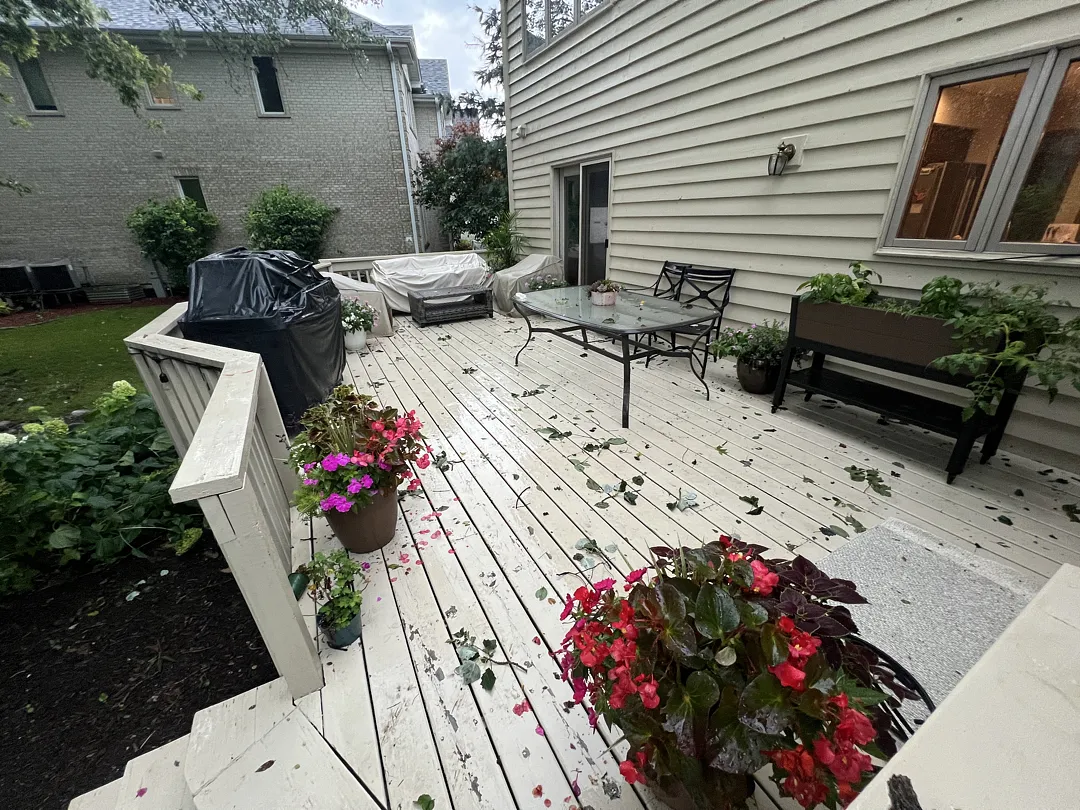
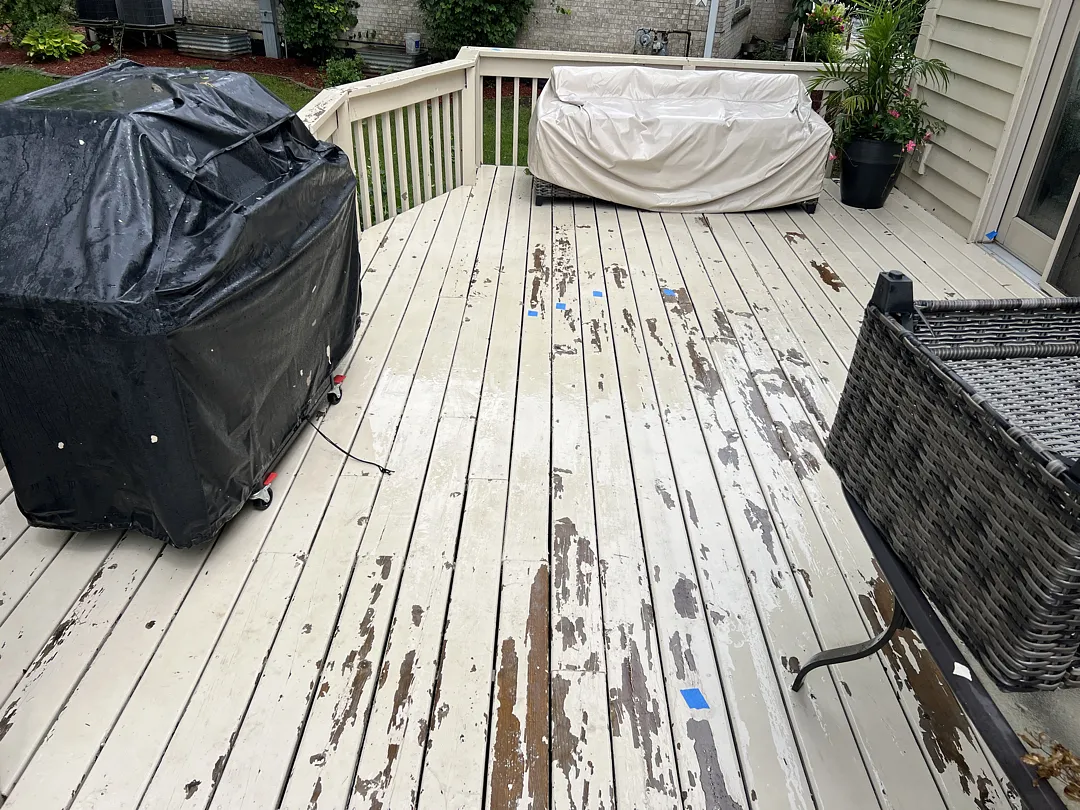
Film finishes usually fail this way. Deck boards take on water through their undersides, ends and fastener holes, and those areas rarely get coated. As the wood swells, shrinks and dries, the film above it cracks and lifts. Once it starts, the edges around each bare patch keep catching and letting go.
That is why brushing another coat over the top rarely lasts. New stain bonds to the old layer, and the old layer is already coming loose. Loose material has to come off first, which is why prep work matters more than the stain on a deck like this one.
Two Boards on the Proposal, 12 by the End
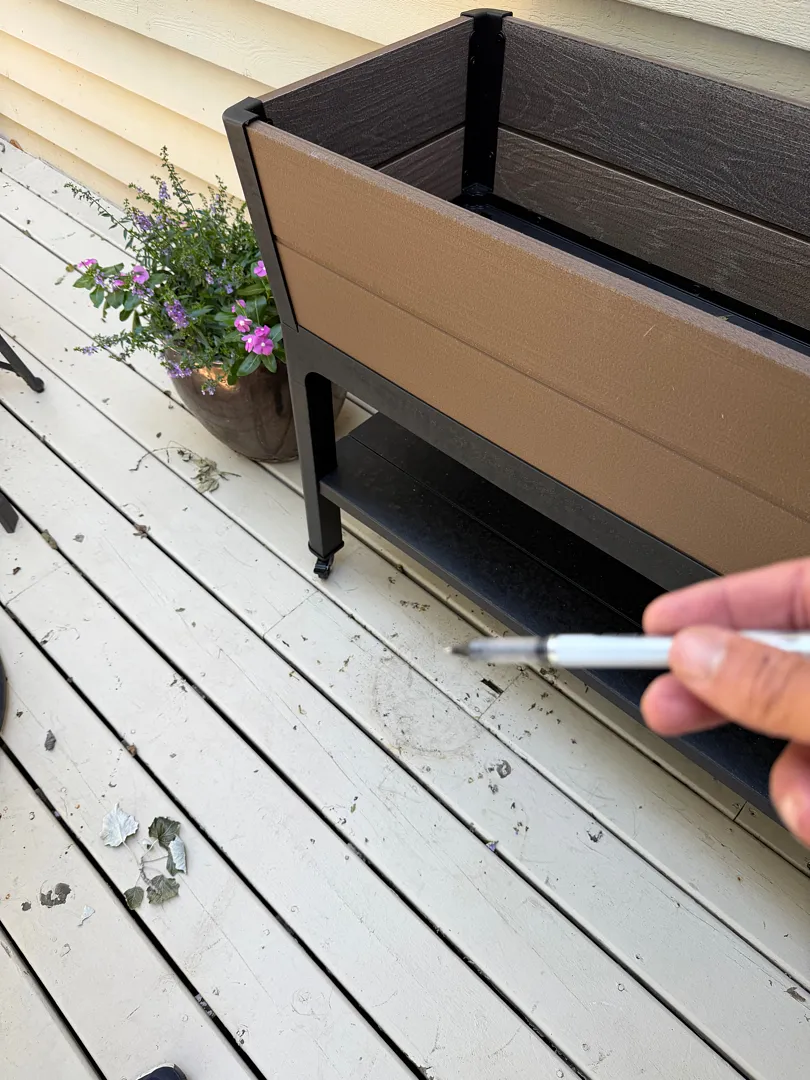
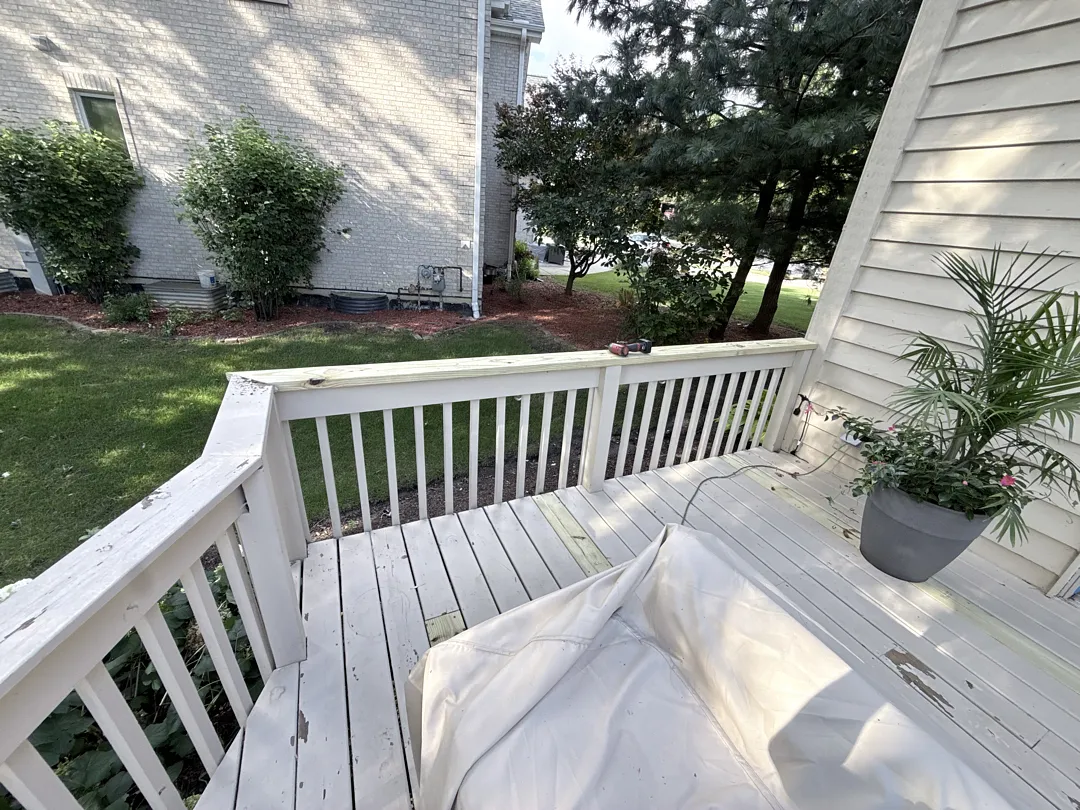
The original repair list was short: one 2×6 treated pine handrail board and one treated pine deck board. But we had seen the condition of the deck, so the proposal said plainly that more repairs were very likely once removal began, and that nothing extra would start until the homeowner had seen it.
That is how it played out. Here is how the repair list changed:
| Repair | Original proposal | Added with homeowner approval | Final count |
|---|---|---|---|
| Deck floor boards | 1 | 9 | 10 |
| Handrail boards | 1 | 1 | 2 |
| Debris haul-off and disposal | Not listed | Added | Included |
A growing repair list can feel like a bad surprise, so we would rather raise it before the job starts. Washing and pulling boards shows things an estimate can’t. A coating can hide soft wood, and a board that looks fine from above can turn out to be in poor shape once it comes up.
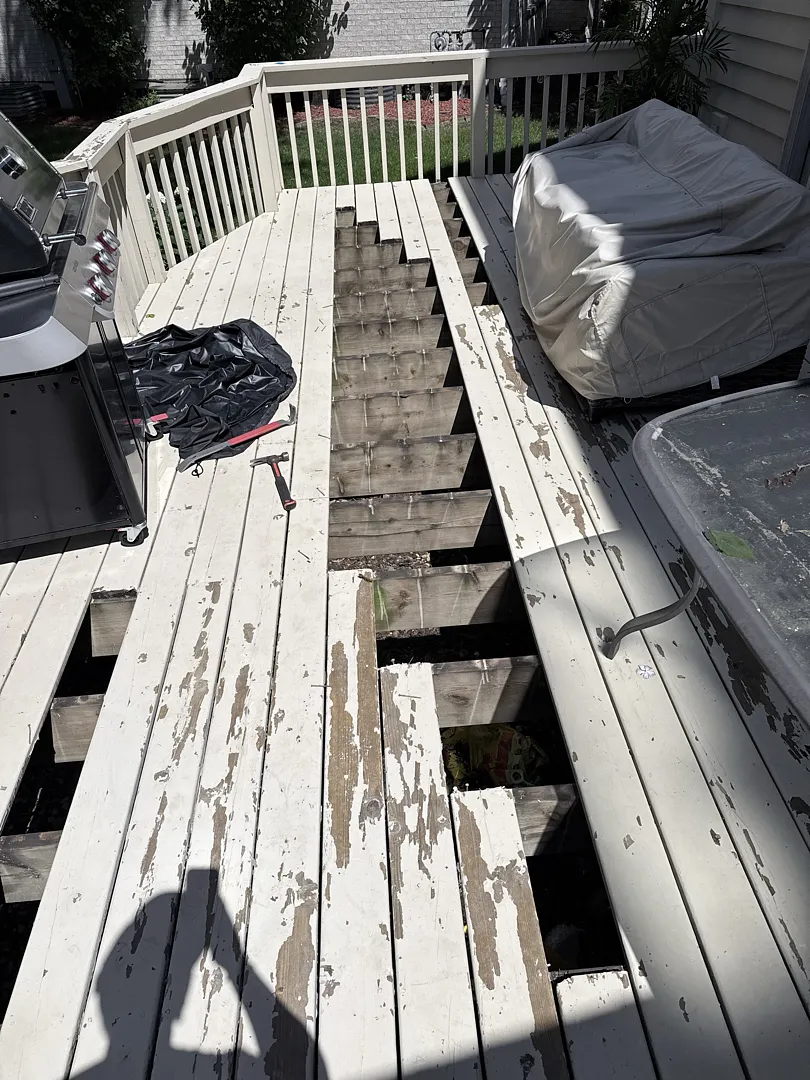
Boards get replaced before any finish goes on. Stain can change the color of a bad board, but it can’t fix it. Our standing recommendation is to replace rotten wood before staining or sealing, and to bring every added repair to the homeowner first.
No joist work was part of this job, so the deck stayed well inside repair territory. If your list keeps growing and framing starts to enter the picture, our guide on when to repair, refinish or rebuild walks through where that line usually falls.
Wash, Sand, Tighten: Where Most of the Labor Went
A deck restoration looks like a stain job in the final photo, but the finish is the short part. Getting the surface ready took three separate passes.
The wash
Cleaner went on first, followed by a power wash to take off dirt and grime. Wood brightener follows where the boards need it. This is also the point where hidden rot tends to show itself, which is why the wash comes before any final repair count.
The sanding
All horizontal surfaces got power sanded for a smooth, even base. Vertical surfaces get lighter sanding at the technician’s discretion, depending on access and what the wood needs.
One honest limit we put in the proposal: this process does not remove every bit of the old coating. Chemical stripping or sanding to bare wood can get closer, but neither one guarantees full removal. That limit is a big part of why the choice of stain mattered here.
Older homes need one extra check before anyone sands. The EPA notes that homes built before 1978 are more likely to contain lead-based paint, and that sanding it can create hazardous dust and chips. If your old deck coating could date from then, get it tested first.
The hardware
Loose nails, screws and bolts we found along the way were tightened and secured. That pass focuses on the critical areas of the immediate deck surface. It is not a full inspection of every fastener on the structure, and we say so up front.
Why Solid Stain Fit This Deck Better Than Semi-Transparent
We like showing off wood grain with a semi-transparent stain when the wood can take it. This deck had two things working against that: an old coating that was never going to come off completely, and a dozen new treated pine boards sitting beside weathered ones.
| What this deck needed | Semi-transparent stain | Solid stain used on this project |
|---|---|---|
| Cover what is left of an old coating | Traces can show through and read as patchy | Covers it under one even color |
| Tie new boards to old ones | The age difference usually stays visible | New and old boards share one color |
| Sun protection | Moderate | The most of any opacity |
| Show the wood grain | Yes | No. Color only, though texture remains |
| Long-term care | Fades gradually | Forms a film, so traffic areas need watching |
The product was Benjamin Moore Woodluxe solid stain, a water-based deck and siding stain that is one of several we keep on our list of products we use. Benjamin Moore lists pressure-treated southern yellow pine among its ideal woods, which suits a repair like this. It rates coverage at 300 to 400 sq ft per gallon and calls for one or two coats.
The homeowner chose Richmond Beige, a warm light tone that sits comfortably against the siding. On our deck staining projects, we bring physical sample boards to every consultation so color can be judged in the yard’s own light. Our proposal covered one coat in one color. With white and other light colors, a second coat can be needed to reach the look you want, so we flag that as a possible add-on before the job begins.
Timing also plays a part in fall work. Woodluxe is applied between 40°F and 90°F, and this project wrapped up in mid-October. Past that point in Chicagoland, the calendar starts making decisions for you, as we explain in when it’s too cold to stain a deck.
One Color, Top to Bottom
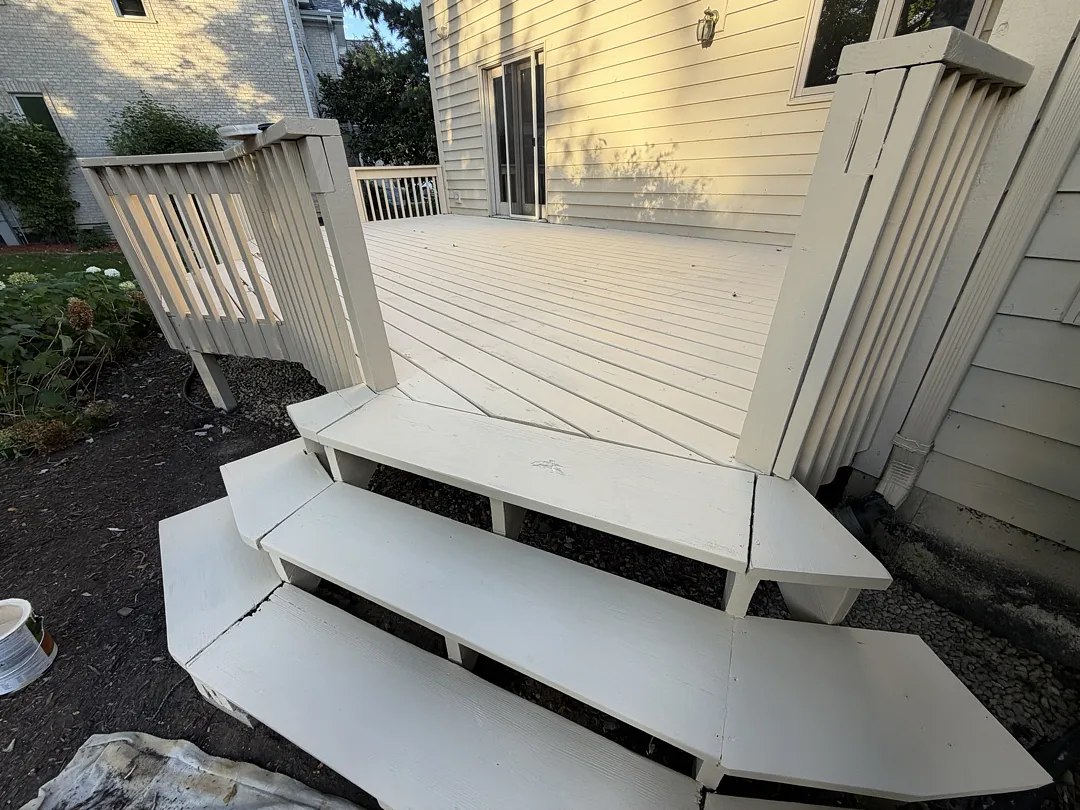
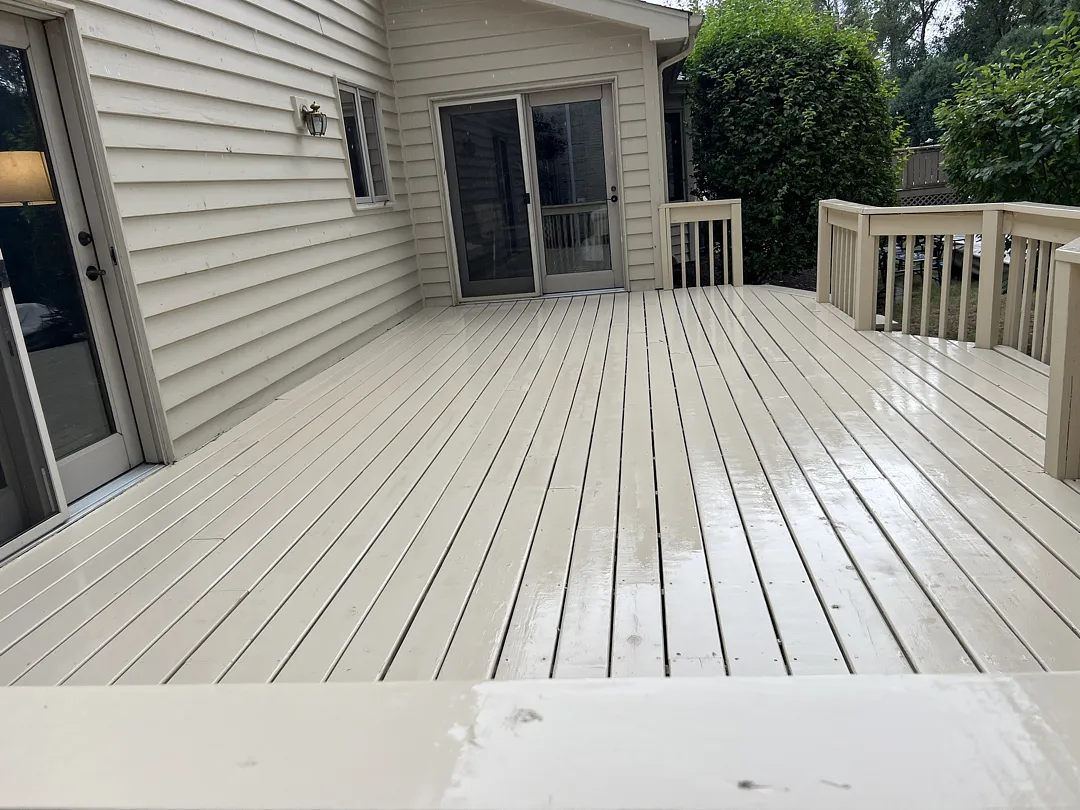
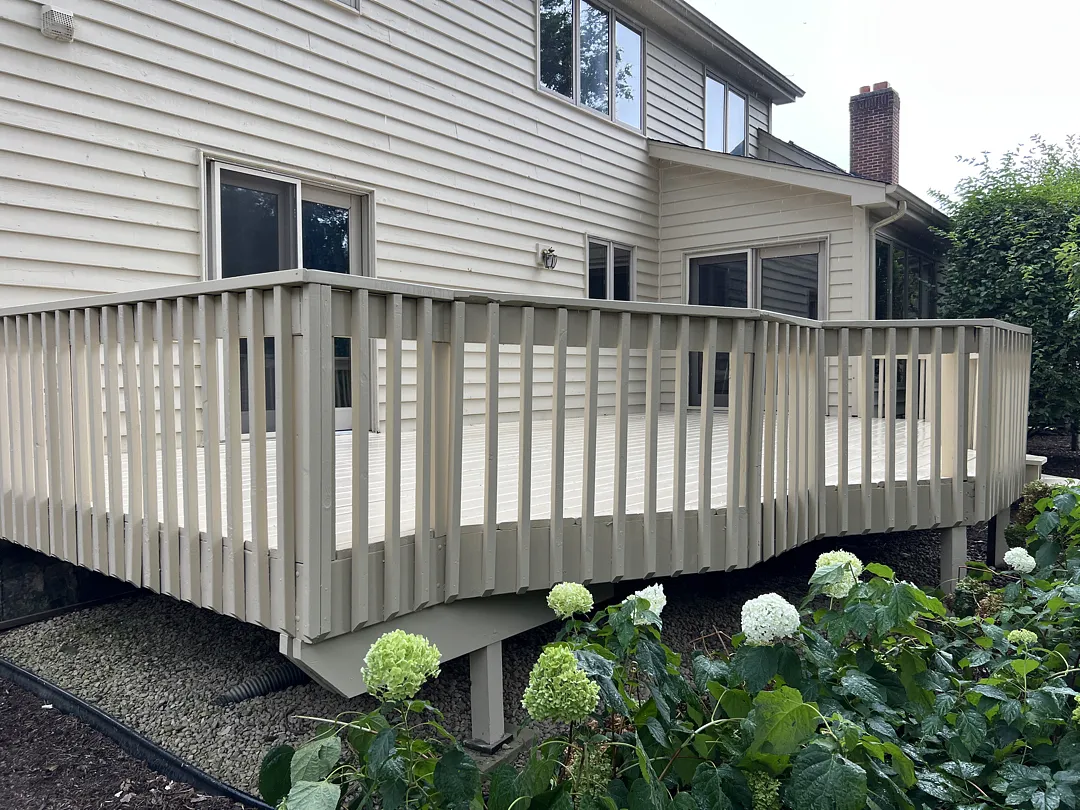
The finished scope covered every accessible surface: the deck floor, railings, stair treads, skirting and visible posts. The patchwork of green boards, bare spots and old coating now reads as one deck.
What a Deck Like This Costs at Our Published Rates
Restoration work is priced in layers: surface work by the square foot, repairs by the job. Applying the rates from our deck restoration cost guide to a 375 sq ft deck looks like this:
| Line item | Published rate | At 375 sq ft |
|---|---|---|
| Deep cleaning | $0.50–$1.50 / sq ft | $190–$560 |
| Sanding and refinishing | $2.00–$6.00 / sq ft | $750–$2,250 |
| Railing and stair detail work | +10–20% of refinishing | $75–$450 |
| Board and structural repairs | $150–$1,200+ per repair | $150–$1,200+ |
| Estimated range | $1,165–$4,460+ |
Ranges from our published rates, not this homeowner’s invoice. Every deck is confirmed after an on-site inspection.
A deck in this condition belongs at the upper end, and can run past it. Heavy peeling means more sanding time, railings and stairs take far longer than open floor, and 12 replaced boards plus haul-off is real carpentry on top of the refinishing. A sound deck with light wear and no repairs sits much closer to the low figure.
What usually moves the number:
- Repairs found after washing. These get quoted only once you have seen them.
- Coating failure. Peeling film takes more labor than faded stain.
- Detail surfaces. Balusters, stairs and skirting add a lot of edges to cut in and coat.
- Color choice. White and light colors may need a second coat.
What This Finish Can’t Promise
Limits worth knowing on any deck like this:
Some of the old coating is still under the new stain. Sanding prepares a surface, but it does not guarantee a return to bare wood.
A solid stain is still a film. The underside of this deck was not part of the project, so boards can still take on moisture from below, and high-traffic areas will wear first.
Hidden rot can appear later. Replacing every board we found does not rule out one that was sound on the day and fails after another winter.
That is why our proposal lists an inspection and maintenance wash within 18 months of completion as an additional service, available on request. It is a low-effort way to catch wear before it spreads. For a broader timeline, see how often you should restain a deck.
Two Local Notes for Willowbrook Homeowners
Check the rules if the scope grows. A wash, some new boards and fresh stain is a much smaller project than a new deck, but the moment framing or layout changes, ask first. The village’s Building Permitting page says obtaining a permit is the property owner’s responsibility, and it lists decks among its residential permit types.
Think about the beds around your deck. On this property, hydrangeas grow right up to the railing, and planting beds sit directly below all of that washing and sanding. Talk through the plants that matter to you before the start date. If you want a second opinion on how a shrub will cope, the Morton Arboretum’s Plant Clinic in nearby Lisle answers homeowner questions.
Willowbrook sits within our regular DuPage County service area, alongside Darien and Burr Ridge. Before our crews arrive, homeowners clear small items from the deck, let adjacent neighbors know the dates, and make sure a water source and power outlet are working. We handle moving the furniture and larger items.
Short Answers on Peeling Decks
Can you stain over a peeling deck? Not with lasting results. New stain bonds to whatever is underneath it, so stain applied over a loose coating will come off when that coating does. The deck needs to be washed and sanded first, and any bad boards should be replaced before staining.
Does sanding remove all of the old deck stain? No. Sanding removes loose material and creates a smooth surface, but traces of the old coating often stay in the wood. Chemical stripping or sanding to bare wood can get closer, but neither one guarantees complete removal.
Is solid stain a good choice for a deck with new and old boards? Often, yes. Solid stain gives new treated boards and older weathered boards the same color, and it covers what is left of an old coating. The tradeoff is that it hides the wood grain and forms a film that needs maintenance in high-traffic areas.
How much does it cost to restore a 375 sq ft deck? At our published rates, cleaning, sanding, refinishing, detail work and repairs on a 375 sq ft deck range from about $1,165 to $4,460 or more. A deck with heavy peeling and many replaced boards sits at the upper end and can go past it. Every deck is confirmed after an on-site inspection.
Do you restore decks in Willowbrook, IL? Yes. We work throughout Willowbrook and the surrounding DuPage County communities, including Darien and Burr Ridge. Every project starts with a free on-site estimate.
Is your deck peeling, or has it already gone past what a coat of stain can fix? We have been working on Chicagoland decks since 2009, and we can tell you what is worth saving after a look in person. Schedule a free estimate or call us on (630) 984-6116.