
A homeowner stains on Saturday. The boards feel dry by Sunday afternoon, so the patio set goes back on. Monday morning there are four dark rings where the chair feet sat, and a matte shadow the shape of the outdoor rug.
Nothing went wrong with the stain. What went wrong was the calendar. Dry and cured are two different things, and almost every ruined finish we get called out to fix comes from treating them as one. Below are the real numbers — dry, recoat, foot traffic, furniture, rain — broken out by finish type, plus the five conditions that stretch them, why autumn shortens all of them, and how we schedule an actual job around them.
Dry, Recoat and Cured Are Three Different Clocks
Every product label lists these separately — the big manufacturers plan a deck job around the same stages, as Sherwin-Williams’ own deck staining guide shows — and they are worth learning because they fail in different ways.
Dry to the touch means the solvent or water carrier has evaporated off the surface. The board no longer feels wet. That is all it means — the finish underneath is still soft.
Recoat window is when the surface will accept another coat and bond to it. With penetrating oils this window is often measured in minutes rather than hours, and it closes rather than opens with time. With film-forming products it works the opposite way.
Cured means the finish has fully hardened — the oils have oxidized or the resins have cross-linked — and reached its real water repellency and abrasion resistance. This is the number that governs when your deck goes back into service, and it is typically four to ten times longer than the dry time.
Skip straight from “dry” to “back in service” and you get exactly the chair rings above. The finish was soft enough to take an impression and still off-gassing underneath whatever you set on it.
Deck Stain Drying and Curing Times by Finish Type
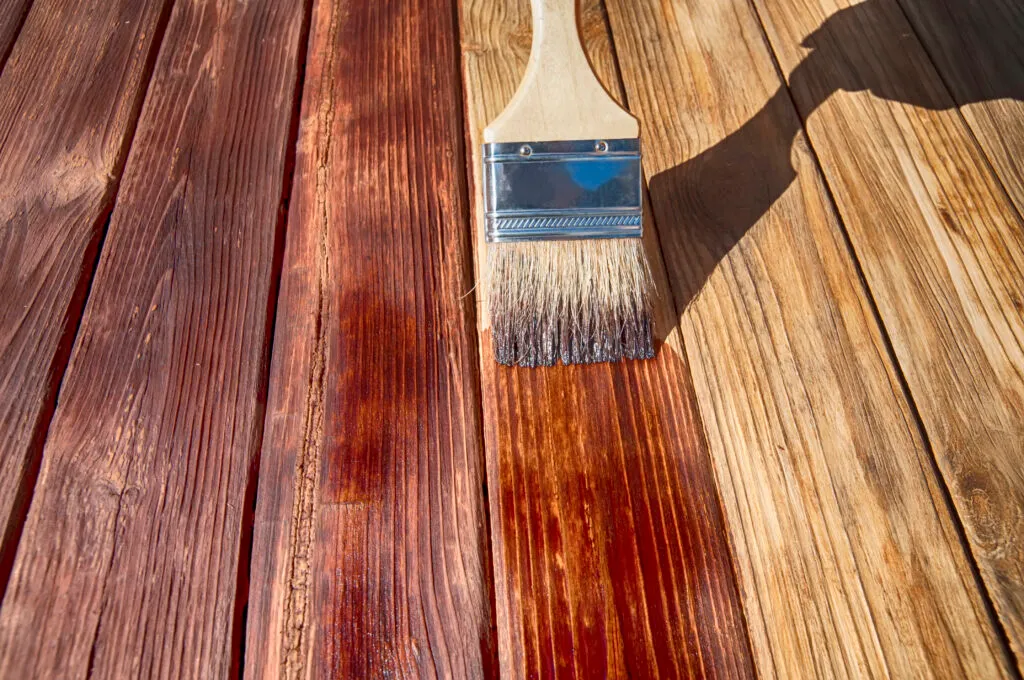
These are working ranges at roughly 70°F and 50% relative humidity, on wood that was properly dry before the first coat went on.
| Finish type | Dry to touch | Recoat | Light foot traffic | Full cure |
|---|---|---|---|---|
| Penetrating oil stain & sealer cedar, pressure-treated pine, redwood | 4–8 hrs up to 24 in cool or humid weather | Wet-on-wet, 20–60 min | 24–48 hrs | 48–72 hrs; repellency builds ~7 days |
| Water-based semi-transparent | 1–2 hrs | 2–4 hrs | 24 hrs | 3–7 days |
| Solid / film-forming stain | 2–4 hrs water-based 6–8 hrs oil-based | 4–24 hrs | 24–48 hrs | 7–14 days |
| Hardwood oil Ipe, Cumaru, Tigerwood | 8–24 hrs | 24–48 hrs | 48 hrs | 7–10 days |
| Clear water-repellent sealer | 2–4 hrs | 4–12 hrs | 24 hrs | 48–72 hrs |
Your label always wins over a table on the internet. Olympic publishes dry times for its own wood stains, for instance, and if the manufacturer’s numbers differ from these, follow the manufacturer — formulations vary more than categories do.
Two things stand out. Water-based products dry fastest and cure slowest, which is the trap: the deck feels finished on day one and stays genuinely vulnerable for another week. And penetrating oils have a recoat window that closes — wait too long between coats and the second one has nowhere to go, so it sits on the surface and never hardens.
When Can You Walk on It, Move Furniture Back, and Let the Dog Out?
This is the part homeowners actually need, and it is rarely printed on the can.
| Back on the deck | Earliest, ideal conditions | What we tell our customers |
|---|---|---|
| Bare feet or socks | 24 hrs | 24 hrs |
| Shoes | 24 hrs | 48 hrs |
| Dogs and pets | 48 hrs | 72 hrs — claws mark a soft finish |
| Light furniture (chairs, side tables) | 48 hrs | 72 hrs, on felt or plastic glides |
| Heavy furniture, grills, planters | 72 hrs | 4–5 days |
| Rugs, mats, anything rubber-backed | 14 days | Two weeks minimum, and never rubber-backed |
| Pots sitting directly on boards | 14 days | Use risers permanently, not just after staining |
Add 24–48 hours to every row if daytime highs are under 60°F or overnight lows drop below 50°F.

The rug row surprises people the most. A rubber-backed mat laid on a finish that is still hardening traps solvent vapor and moisture against the wood with nowhere to escape. What you get underneath is a soft, discolored patch that usually needs sanding out. The same goes for pots — and honestly, planters should live on risers permanently, not just for the first two weeks.
How Long After Staining Can It Rain?
The short answer: keep it dry for 24 to 48 hours. The useful answer depends on when the rain arrives.
Rain in the first 4–6 hours is the case that does damage. The finish has not flashed off yet, water lands on wet stain, and you get spotting, blotching and a washed-out, uneven look. There is no waiting that one out — the surface needs cleaning and recoating.
Rain at 12–24 hours on a penetrating oil is usually survivable. The oil is in the wood by then. You may see temporary water spots or a light haze that fades over the following week as the finish continues to harden. Leave it alone before deciding anything is wrong.
Rain after 48 hours is a non-event on a properly applied penetrating finish, and only a mild concern on a film-forming one that is still weeks from full cure.
If you got caught, resist the urge to fix it immediately. Give the deck a week of dry weather, then look again. A surprising share of “ruined” finishes even out on their own, and the ones that do not are far easier to assess once everything underneath has hardened.
Five Things That Actually Change Your Dry Time
1. Air temperature. Cooler air slows both solvent evaporation and the oxidation that hardens an oil finish. Below about 50°F the cure does not just slow down, it can effectively stall until the weather warms back up. That is why we watch overnight lows rather than daytime highs — we go into the exact number in the fall cutoff we use.
2. Surface temperature, not air temperature. Measure the boards, not the thermometer on the porch. A south-facing deck in direct sun can read 30°F above ambient. Above roughly 90°F on the surface, stain flash-dries before you can keep a wet edge, and you get lap marks along every stopping point.
3. Humidity and dew point. The rule painters use, and the one almost no DIY guide mentions: the wood surface should be at least 5°F above the dew point when you apply, and stay there while the finish flashes off. That margin is not something a painter invented: it is written into the coatings standards ASTM D3276 and ISO 8502-4, which require the 5°F gap through preparation, application and cure alike. Get inside that margin and moisture condenses into the coating as it sets, leaving haze, blush, or a finish that never fully hardens. It predicts trouble far better than the humidity percentage on your weather app.
4. Wood moisture content. Boards should be under about 15% moisture content before anything goes on them — an inexpensive moisture meter settles it in seconds. In practice that means waiting a full 48 hours after washing or rain. Wood that feels dry underfoot is routinely still carrying water an eighth of an inch down, and finishing it seals that water in.
5. How much product you applied. This is the biggest single cause of stain that never cures, and it is entirely within your control. A penetrating oil absorbs only what the wood can take. Everything past that sits on the surface with nothing to soak into and stays tacky more or less forever. Wipe back the excess within 15 to 30 minutes and the problem does not exist.
Why Fall Shortens Every One of These Windows
Everything above is true in July. In late September and October, three things compress it at once.
The usable application window gets shorter at both ends. Dew sits on boards well into mid-morning, so you cannot start early, and it begins forming again a couple of hours before sunset — which by mid-October is late afternoon. The stretch where the wood is genuinely dry and warm enough narrows to a handful of hours.
Cure time stalls overnight. A finish that would cure in 48 hours in summer keeps hardening only during the warm part of each autumn day. Practically, a 48-hour cure becomes four days, and the furniture timeline moves with it.
The margin above dew point disappears first. This is the one that catches people out. A 62°F afternoon sounds workable, but if the dew point is 58°F the boards are inside that 5°F margin, and moisture will condense into the finish as the sun drops.
So our working rule through fall is simple: the last coat goes down by early afternoon, with enough daylight and warmth left for the finish to flash off before evening dew arrives. Not because the calendar says so — because the coating needs those hours.
How We Timed a Real Job: 600 Square Feet in Mundelein
Here is what that looks like on an actual deck rather than in theory.
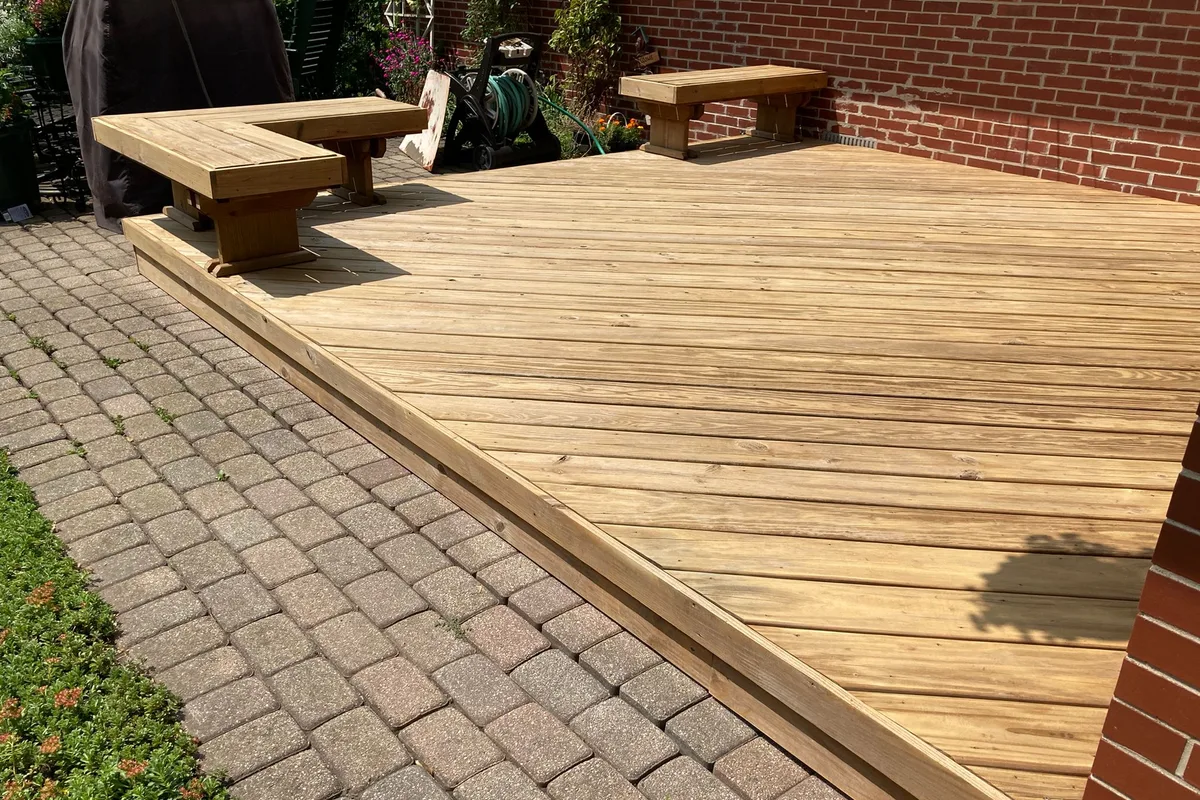
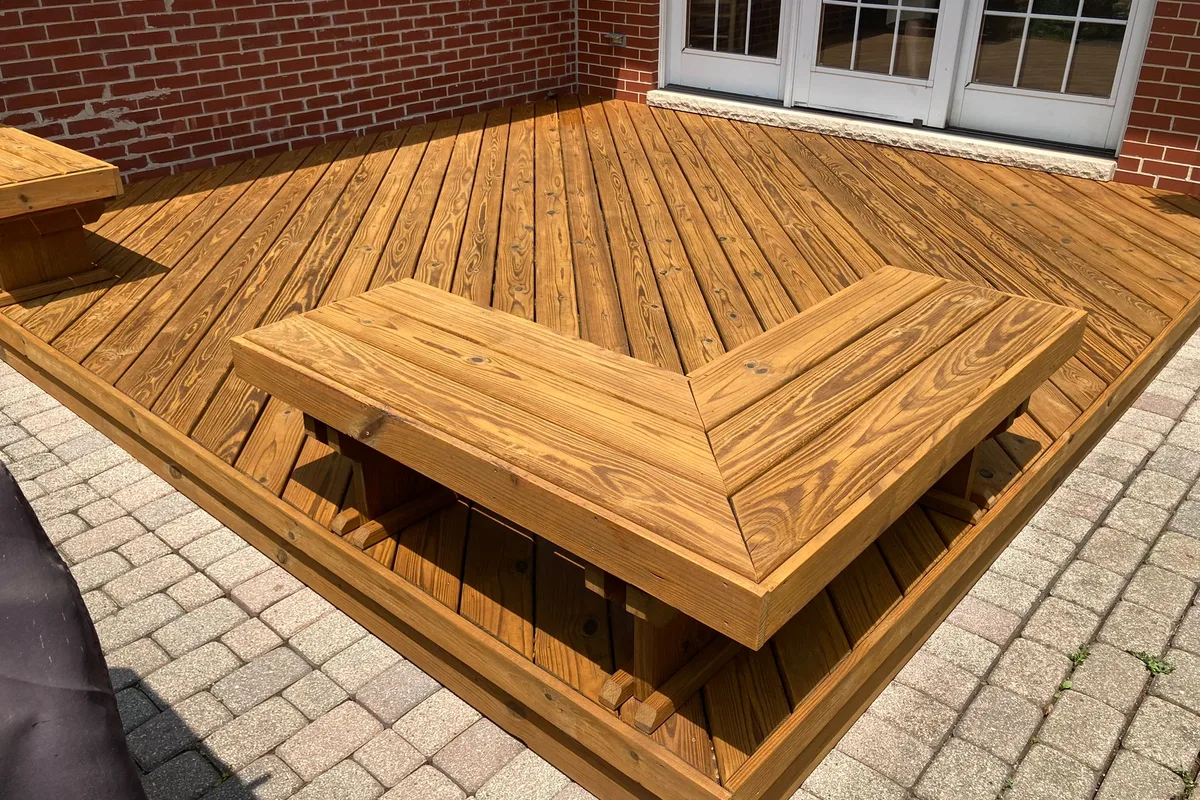
Six hundred square feet on a two-story house, semi-transparent stain, finished in August this year. Our crew was on the boards at eight in the morning and off them by ten. Two full coats in two hours sounds fast until you understand why the timing works that way.
Eight o’clock is not an arbitrary start. It is late enough that overnight dew has burned off the boards, and early enough that the entire warm part of the day is left for the finish to flash off. On a deck this size we are not going to be chasing daylight at the far end.
Both coats went on wet-on-wet. With a penetrating oil, the second coat goes down while the first is still open — typically inside the hour — so the two absorb as one rather than stacking. Wait until the first coat has dried and the second has nothing left to penetrate; it sits on top and stays tacky. This is the opposite of how you would treat a solid, film-forming stain, and it is the single most common mistake we see on DIY decks.
Six hundred square feet is where discipline matters. Semi-transparent stain shows every seam in the application. It has to go on in even passes, wet edge to wet edge, with no puddling at the board ends — and on a deck this size, the only way to keep a wet edge is to keep moving and not stop mid-run.
What the homeowner was told on the way out: off the deck for 24 hours, shoes only after that, furniture back at the end of the week. The invoice went out the same morning. Two hours of work, four days before the deck is genuinely back in service — and that gap is the whole point of this article.
The Finish You Choose Changes the Entire Timeline
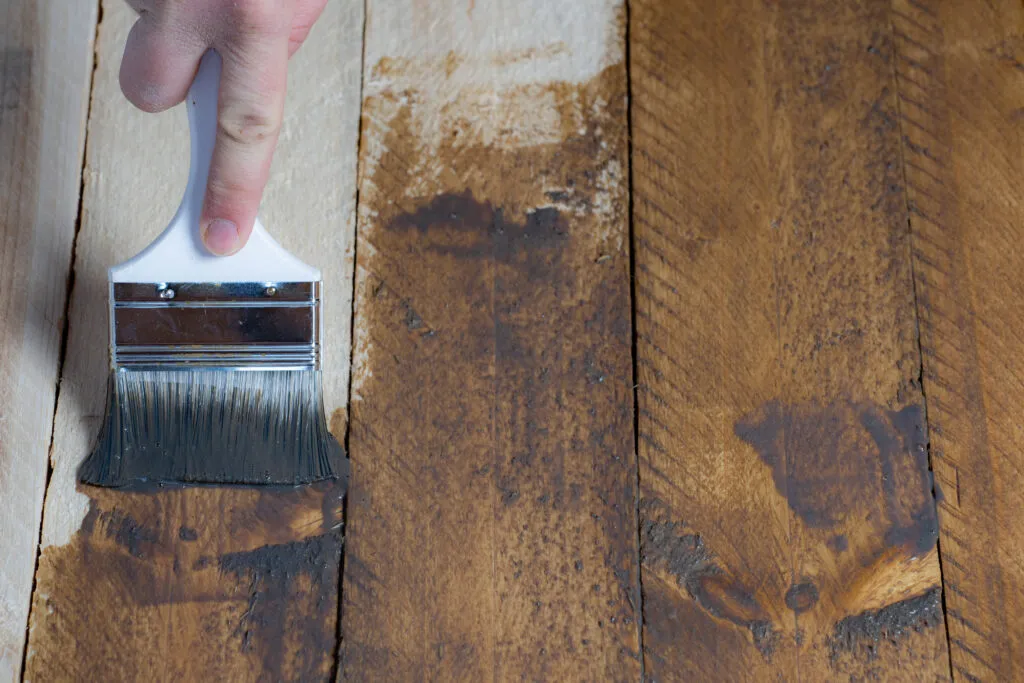
Cure time is not really a property of the weather. It is a property of the product, and the two families behave in opposite ways.
Penetrating oils soak into the grain and harden inside the wood. They take longer to reach full cure, but they are forgiving about it — nothing to peel, nothing to flake, and when the finish eventually wears down, maintenance is a clean-and-recoat rather than a full strip. That is why we standardize on Rymar Xtreme Weather for cedar, pressure-treated pine and fences, and why almost every timing figure in this article assumes a penetrating finish. The full shortlist is on our products we use page.
Film-forming and solid stains build a layer on top of the wood. Surface dry is quick, but full cure runs one to two weeks, and a bad cure is expensive: instead of a recoat you are looking at stripping the whole surface. If you want pigment without the film, a semi-transparent stain is the middle ground — color and UV protection with a finish that still breathes.
Signs the Stain Did Not Cure — and What to Do
- Still tacky after 72 hours. Over-application, cold weather or damp wood. On an oil finish, a rag lightly dampened with mineral spirits will lift the excess — test a small area first — then give it warm, dry days.
- Shiny or glossy patches on a product that should dry flat. That is excess sitting on the surface rather than in the wood.
- Footprints or marks that do not fade after a week. The finish was walked on before it hardened.
- Dark blotches or a white haze. Moisture got in, either from rain too soon or from finishing wood that was not dry.
- A finish that never stops feeling soft heading into cold weather. That deck goes into winter unprotected, which is the outcome our winter deck prep guide is written to prevent.
None of these mean the deck is ruined. All of them are easier and cheaper to sort out in the first month than after a freeze-thaw season has worked on them.
The Timeline We Give Every Customer
- Wait a full 48 hours after washing or rain before any finish goes on the wood.
- Check that the surface temperature is at least 5°F above the dew point, at application and for the hours after.
- Wipe back excess penetrating oil within 15–30 minutes — the wood keeps only what it can use.
- Second coat wet-on-wet for penetrating oils; the full label recoat window for solid stains.
- Nobody on the deck for 24 hours. Shoes after 48. Pets after 72.
- Light furniture back at 72 hours, on glides. Heavy furniture and the grill at 4–5 days.
- Rugs, mats and pots stay off for two weeks, and never anything rubber-backed.
- In fall, add a day or two to all of it and get the last coat down by early afternoon.
- Plan the next one properly with our guides on prepping a deck for stain and how often to restain.
Frequently Asked Questions
How long does deck stain take to dry? Most deck stains are dry to the touch in 4 to 8 hours at 70°F and around 50% relative humidity. Water-based stains can be dry in 1 to 2 hours, penetrating oil stains usually need 4 to 8 — up to 24 in cool or humid weather — and dense hardwood oils can need 8 to 24. Dry to the touch is not the same as cured, and cool or damp conditions stretch every one of those numbers.
How long does deck stain take to fully cure? Full cure takes 48 to 72 hours for most penetrating oil stains, with water repellency continuing to build for up to a week, and 7 to 14 days for solid film-forming stains. Curing is when the finish has fully hardened and reached its real water and abrasion resistance, which is why furniture and rugs should stay off the deck well past the point the boards feel dry underfoot.
How long after staining a deck can it rain? Keep a freshly stained deck rain-free for at least 24 to 48 hours. Rain in the first 4 to 6 hours is the damaging case, because it lands before the finish has flashed off and leaves spots, blotches and a washed-out look. Once a penetrating oil has had a full day to absorb, light rain usually does no lasting harm.
When can you put furniture back on a freshly stained deck? Wait 72 hours for light furniture and 4 to 5 days for heavy pieces, grills and planters. Rugs, mats and anything rubber-backed should stay off for at least two weeks, because they trap solvent vapor and moisture against a finish that is still hardening and can leave permanent marks in the boards.
Why is my deck stain still sticky days later? Almost always too much product, applied too cold, or applied to damp wood. A penetrating oil only absorbs what the wood can take, and the excess sits on the surface with nothing to soak into, so it stays tacky indefinitely. Wiping back the excess within 15 to 30 minutes of application is what prevents it.
Can you apply a second coat of deck stain before the first coat is dry? With penetrating oil stains, yes, and often you should. Many are designed to be applied wet-on-wet, with the second coat going on within roughly 20 to 60 minutes while the first is still open, so the two absorb as one. Film-forming and solid stains are the opposite and need the full recoat window printed on the label.
If your deck is somewhere in this timeline and not behaving the way it should, that is worth a look before the cold arrives. We have been finishing Chicagoland decks since 2009, every quote is a free on-site visit, and from our base as your Glenview deck contractor we cover the North Shore and the western suburbs, Mundelein included. Book an estimate or call us on (630) 984-6116.